Catalog › Hoses and fittings › Hose protection and clamps
Hose End Fittings, Spiral Hose Guard, Fire Sleeve and Hose Trunking
Not the hose itself, but the parts that connect and protect it: 1/4"–2" hose ends, polyethylene spiral guard, silicone fire sleeve and hose trunking.
Most hydraulic hose failures start not in the middle of the hose but at its two ends and on its outer surface. At the end, a connection works loose or is tightened wrongly; on the outside, the hose rubs against a corner, against another hose or against the machine frame until the abrasion reaches the braid. This page gathers the parts aimed at those two points — for the hose itself see the «Hydraulic Hose» and «SEL Hose» pages.
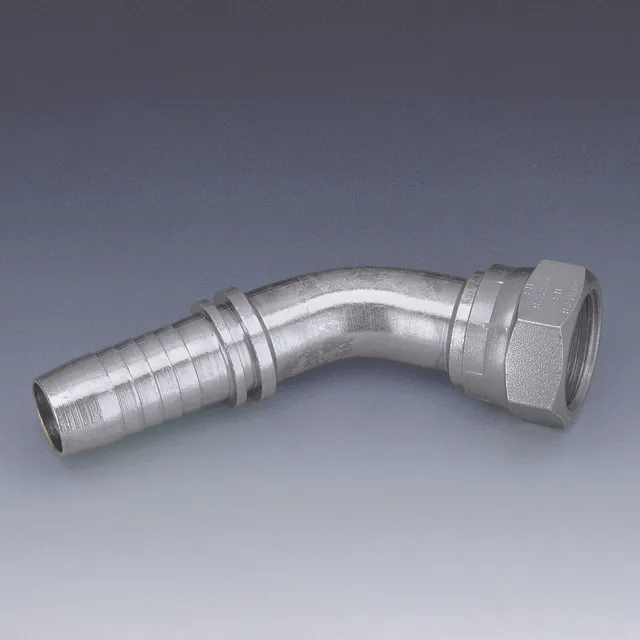
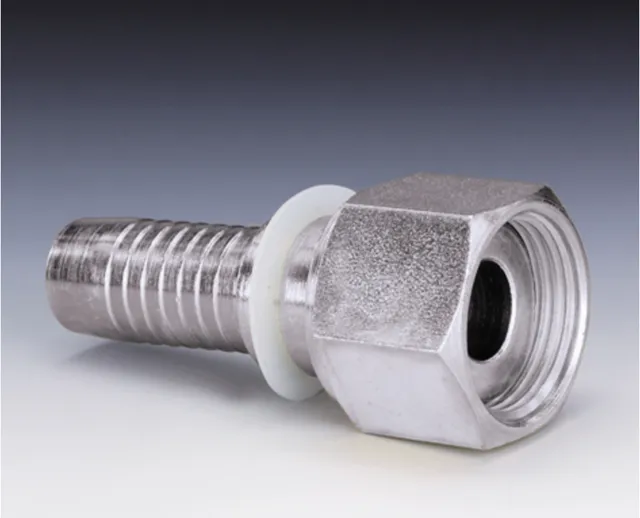
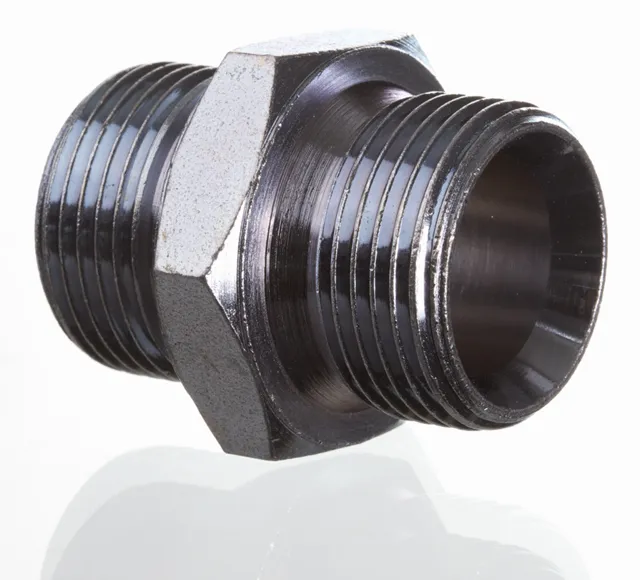
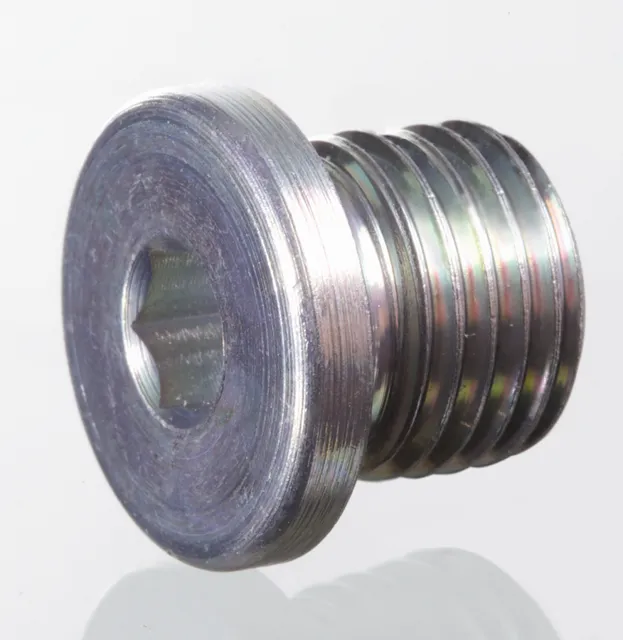
A hose end is the connecting part fitted to the end of the hose; its size is given in inches according to the hose bore (1/4", 5/16", 3/8", 1/2", 5/8", 3/4", 1", 1.1/4", 2"). Choose the wrong size and the connection either will not seat at all or blows off under pressure; the bore size is read from the print on the hose.
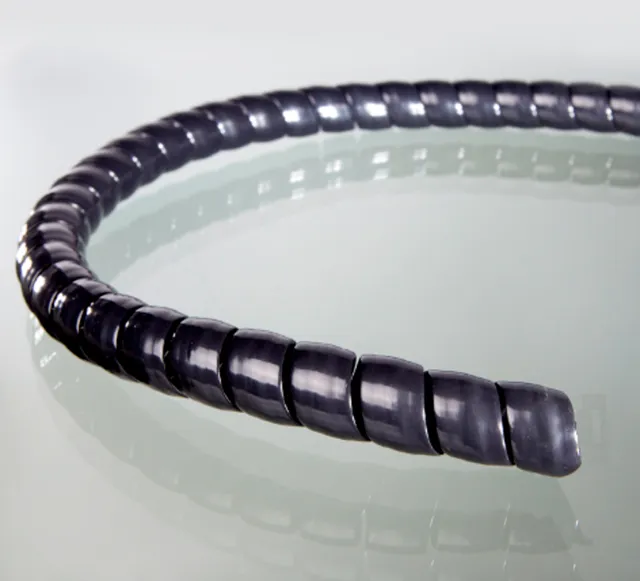
Spiral guard is a split plastic spiral wound around the hose. It does two jobs: it protects the hose from external abrasion and keeps hoses running side by side from chafing each other. It also limits, to a degree, the spray of oil if a hose bursts. The size is selected from the outer diameter of the hose being wrapped (23×27, for example: inner and outer diameter). Gathering a bundle of hoses in a single spiral is better than wrapping each one, both for tidiness and for service life.
Fire sleeve is a silicone-coated braided sleeve used where there is weld spatter, hot surfaces or a risk of flame; it insulates the hose from heat and sparks. On foundry, press and welding lines it multiplies hose life.
Hose trunking is the plastic channel used to carry hoses and cables tidily along a machine. It stops a free-hanging hose from chafing itself away under vibration.
Brands and series
Vereks 8 products
Ferro 4 products
Series pages are in Turkish; product codes are the same in every language.
Other products (brand not specified)
407 products in our price lists with no brand or no code stated, sorted by name (in Turkish). Pages: 1.
Brands and standards in stock
Frequently asked questions
How is hose end size determined?
A hose end is selected by the INNER diameter of the hose, given in inches. The bore is printed on the hose; where it cannot be read, it is measured from a cut end. Selecting by outer diameter is a common mistake — hoses of the same bore vary in outer diameter with the number of braid layers.
How is spiral guard size chosen?
Spiral guard is selected by the OUTER diameter of the hose it will wrap; items give inner and outer diameter together, such as 23×27. If the inner diameter is smaller than the hose outer diameter, wrapping is a struggle and the guard strangles the hose; too large and it slides away from the point that needs protecting. For a bundle, measure the overall diameter of the bundle.
Is spiral guard really necessary?
Not if the hose is stationary and touches nothing. But on moving booms, in bundles of hoses running side by side, and where hoses pass close to sharp corners, the outer cover abrades down to the braid — and once the braid shows, the hose is a burst waiting to happen. In those places spiral guard extends the replacement interval noticeably.
When is fire sleeve used?
Wherever there is weld spatter, hot swarf or contact with hot surfaces. The silicone-coated braid insulates the hose cover from sparks and heat. On foundry, press and welding lines it extends hose life markedly, and it also reduces the risk of oil igniting if a hose fails.
Is a hose end the same thing as a fitting?
No. A fitting connects two lines by thread or compression ring. A hose end is the part that goes onto the end of the hose and prepares it for that connection. The two are usually ordered together; for fittings see the «Hydraulic Fittings» page.
Get a quote for Hose protection and clamps
Send us the size and quantity you need and our sales team will get back to you the same day with pricing and lead time. If you're not sure of the size, a photo of the part you have is enough.