
Catalog › Technical guides › Seal material selection
Seal Material Selection: NBR, Polyurethane and FKM Compared
The same size exists in three materials, and temperature, fluid and abrasion decide which one is right. Working limits, strengths and weaknesses of NBR, PU and FKM.
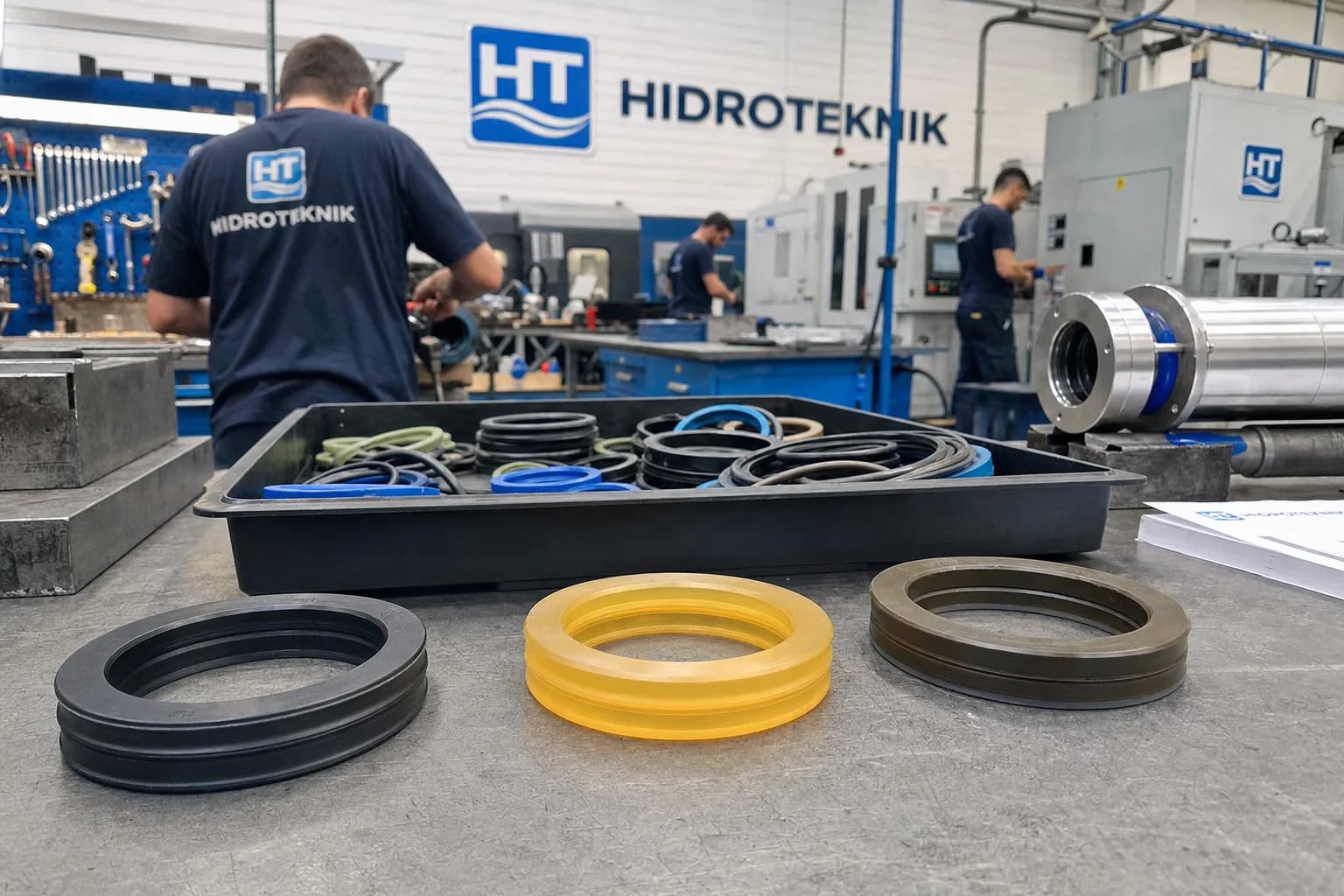
Choosing a seal is half size and profile code, half material. The same K21 profile in the same 40 x 50 x 8 size may exist in three materials, and fitting the wrong one does not give the same result as fitting the right size.
Three questions decide it, and the order matters: temperature first, then fluid, then pressure and abrasion.
NBR (nitrile rubber) is the default and makes up most of the stock. It works excellently with mineral-based hydraulic oil, is safe roughly between −30 °C and +100 °C, and is the cheapest. In an ordinary hydraulic circuit that stays below 80 °C in a clean environment, nothing beyond NBR is needed. Its weakness is a narrow window: in hot oil it hardens, cracks and loses lip flexibility.
Polyurethane (PU) resists abrasion and extrusion markedly better than NBR. It is the preferred rod seal in dusty, muddy, shock-loaded construction machinery, and at high pressure it holds the lip out of the clearance gap far longer than NBR. In exchange its temperature window is narrower (roughly −30 °C to +80 °C), and its real weak point is water: above 50 °C it hydrolyses, meaning it breaks down chemically. Where there is hot water, steam or a high-water-content fluid, PU is not the choice.
FKM (Viton) is the temperature and chemical resistance material. It works up to +200 °C and withstands many chemicals besides mineral oils. Around furnaces, foundries, presses and chemical lines there is no alternative. It costs twice: the price is markedly higher, and it is less flexible than NBR at low temperature, stiffening below roughly −20 °C. Contrary to common belief it is also not good in hot water and steam.
The practical route: if temperature exceeds 100 °C or aggressive chemicals are present, FKM; if the environment is abrasive, pressure high and there is no water, PU; in every remaining case, NBR.
Frequently asked questions
How do I tell which material I currently have?
Removing and inspecting is the only certain way, but colour is a strong hint: NBR is usually black, polyurethane amber-yellow or reddish, FKM most often brown-green or black. Colour varies between manufacturers, so if you are unsure send us the old part and we will identify profile and material together.
Is polyurethane always better?
No, and this is a common misconception. PU beats NBR on abrasion and pressure resistance, but it hydrolyses in hot water and has a narrower temperature window. In a system running water-glycol fluid, or with water contact above 50 °C, PU lasts a shorter time than NBR.
Is the temperature limit the oil or the ambient?
The seal sees the temperature of the oil it touches, and that is higher than tank temperature. Friction at the rod surface heats it locally. If you measure 70 °C in the tank, the seal lip is seeing more than that; if you are working near the limit, move up a material.
I run water-glycol or HFC fluid — which material?
NBR is compatible with these fluids and is the right choice. Polyurethane is not suitable: it hydrolyses in high-water-content fluids. FKM also performs poorly with water and steam. If you use a fire-resistant fluid, follow the compatibility table in that fluid’s own datasheet.
FKM seals are expensive — can I get by with NBR?
Not if the temperature really is above 100 °C; NBR hardens, the lip cracks and it starts leaking within weeks. But make sure you have measured it — a system that "feels hot" often turns out to be 70-80 °C, and NBR is adequate there. Buying FKM without measuring is money spent for nothing.
Can different materials be mixed in one cylinder?
Yes, and it is normal. Piston seal, rod seal and wiper do different jobs; the wiper faces outside dust and water, the piston seal only oil. Repair kits therefore often contain mixed materials. If you break a kit and replace a single part, keep the material of the old part.
Do the same rules apply to O-rings?
The temperature and fluid rules apply exactly; NBR and FKM are the two most common options. The difference is that the abrasion criterion usually drops out: an O-ring normally seals statically and does not move. Polyurethane’s abrasion advantage therefore loses its meaning in an O-ring.
Related product groups
Get a quote for Seal material selection
Send us the size and quantity you need and our sales team will get back to you the same day with pricing and lead time. If you're not sure of the size, a photo of the part you have is enough.